Want to tackle the damp in your basement yourself? Follow this simple step-by-step guide!
Due to their underground position, basements often suffer from moisture issues. During wet seasons or periods of heavy rainfall, groundwater builds up and puts pressure on the basement structure, potentially leading to moisture problems. Fortunately, you can tackle basement damp yourself with the right know-how. In the step-by-step plan below, we’ll show you how to detect the source of the issue, which products to use to treat cracks or fissures, and how to keep your basement dry in the long run.
Step 1: Identify the source of the moisture problem
To tackle a moisture problem, you must first determine the cause. Inspect the walls and floor for cracks or fissures. Check the connection between the walls and the floor, and look for potential problem areas around window openings.
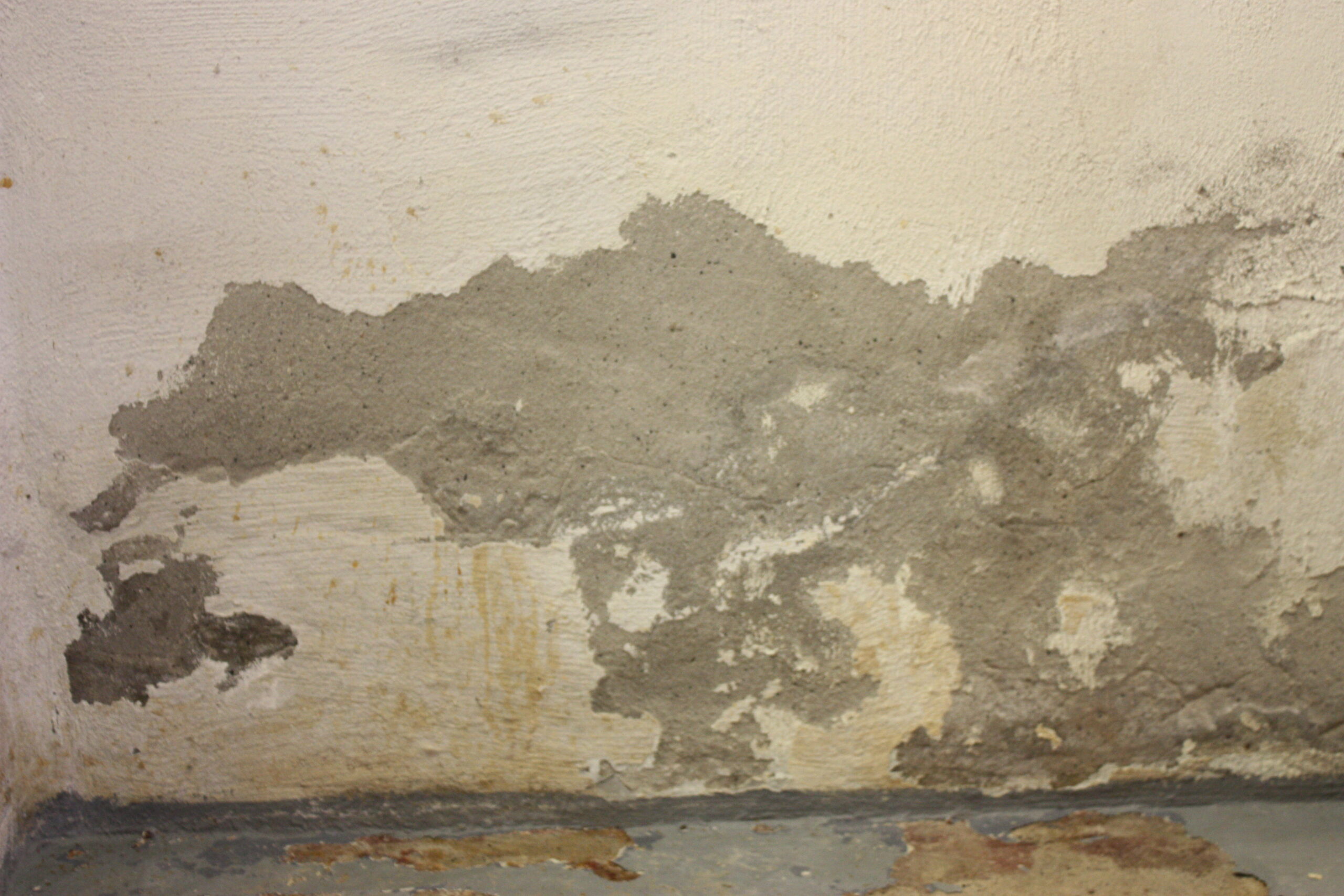
Have you noticed any mould (black spots or white deposits), peeling paint, or brown discolouration on the wall, floor, or ceiling? These are typical signs that the source of the problem is nearby. A persistent musty smell, even after ventilation, can also be a red flag.
If you’ve detected one or more of these signs, always ask yourself if the actual cause of the moisture problem is at that specific location or whether it originates elsewhere. Sometimes, a single source of moisture can manifest in different ways or in various spots throughout the basement. So be sure to check that you’ve located the cause, not just the symptoms.
Step 2: Tackle the moisture problem head-on
Have you identified the cause of the damp in your basement? Then it’s time to address the problem.
Cracks or fissures in the basement structure
The largest or most deep-seated leaks in the basement structure can be effectively sealed using Aquaplan’s Basement Protect Regular Plug. First, chisel open the cracks or fissures, then apply this fast-curing product to the openings. Basement Protect Regular Plug expands quickly to seal the leak, even under very high pressure. This waterproof cement is ideal for use on masonry and concrete, or between the wall and floor slab.
Give damp no chance with a fully waterproof finish
Once the major leaks are sealed, it’s time to complete the job and make your basement fully waterproof for the long term. With the following products, any DIYer – whether a complete beginner or seasoned pro – can get started:

Basement Protect Epoxy
Basement Protect Epoxy is a two-component epoxy coating for both walls and floors. It’s suitable for use on bricks or cement facing free of dust and grease. Because it penetrates deep into the substrate, it strengthens the structure of your walls and floor. It’s also hard-wearing (ideal for use on floors) and paintable, so you can brighten up your basement afterwards with a coat of paint.
Basement Protect Cement
This white, waterproof cement coating blocks groundwater before it can enter your basement. Please note: this product is suitable for walls only. You can apply Basement Protect Cement on untreated wall surfaces like cement or concrete blocks.
To ensure the best possible result, apply two coats of both Basement Protect Epoxy and Basement Protect Cement. Not sure how to get started? Watch the helpful instruction videos and read the product manuals carefully (found on the relevant product pages linked above).

Step 3: Ensure adequate ventilation
After waterproofing your basement, it’s essential to ventilate the space regularly. This prevents mould growth and unpleasant odours. If your basement has no windows, a ventilation grille is also an excellent solution. This allows any condensation caused by high humidity to escape, and your room remains dry and moisture-free.
Extra: calculate how much product you need
Are you ready to start, but unsure how much product you’ll need? Use our handy product calculator. Simply enter the dimensions of your wall or floor to calculate the quantity required. That way, you’ll avoid buying too much or too little (and overpaying).
That’s it! With this step-by-step plan and Aquaplan’s high-quality products, you’re fully equipped to tackle a damp basement yourself. Tackle the moisture problem and start enjoying a dry basement once again!
Blogs that you also enjoy reading

How to waterproof your exterior wall with impregnation cream